Mali is home to the Great Mosque of Djenné, the manuscripts of Timbuktu, Dogon cliff villages and a celebrated musical heritage.
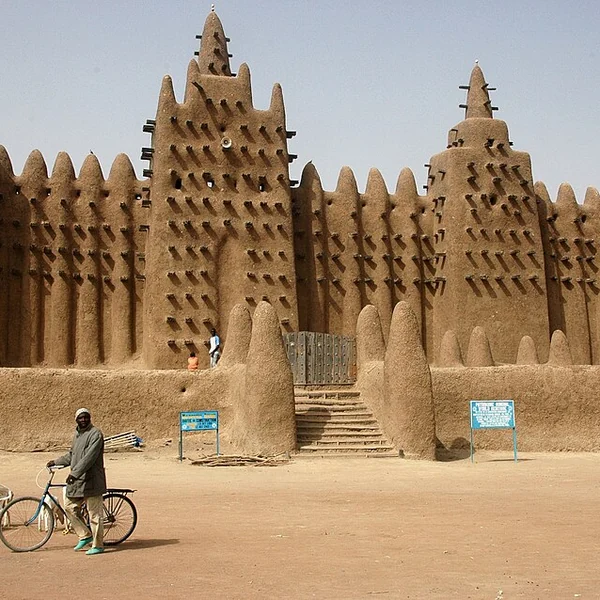
The Great Mosque of Djenné is one of the largest mud-brick buildings in the world and part of a UNESCO-listed old town, replastered by the community in an annual festival. Access for non-Muslim visitors has long been restricted, and any future visit depends on official advice.
Timbuktu was a great centre of trade and Islamic learning, known for its Djinguereber, Sankore and Sidi Yahia mosques and its historic manuscripts. Its heritage is UNESCO-listed; for now it is best explored through books, exhibitions and documentaries.
The Bandiagara Escarpment is home to Dogon villages, granaries and cliff dwellings, and is UNESCO-listed for both its culture and its landscape. Any future visit would require local guides and current official advice allowing travel.
Bamako, the capital on the Niger River, is known for its National Museum, busy markets and live music. It would be the usual entry point for any future itinerary, when official advice allows.
Ségou is a river town known for its colonial-era architecture, pottery and the Festival on the Niger. It lies on the route between Bamako and Djenné, for future planning when official advice allows.
Djenné: admire the earthen Great Mosque and its historic town.
Timbuktu: learn about centuries of Islamic scholarship and manuscripts.
Dogon Country: discover cliff villages and traditions along the Bandiagara Escarpment.
When official advice allows, a future visit would combine Bamako with the Niger River towns and the Dogon Country, using experienced local operators and generous transfer days. For now, this page is offered as background on Mali’s history and culture.
Discover the legacy of the Mali Empire, griot storytelling, mud-brick architecture, bògòlanfini mud cloth and internationally known musicians.
Try riz au gras, tô (millet porridge) with sauces, maafe (peanut stew) and bissap, a hibiscus drink.
The cooler dry months from about November to February are the most comfortable; March to May is very hot and the rainy season runs roughly June to September.
When official advice allows: Bamako → Ségou → Djenné → Dogon Country
Australian Government travel advice for Mali may advise against all travel. Panorama Tours only plans trips when official advice allows; check the current advice before making any plans.
Panorama Tours Sydney can help plan a personalised visit to Mali, including suitable transport, accommodation, guided activities and connections to nearby destinations. Tell us your preferred dates, interests and budget so we can prepare options subject to availability. For this destination, we only prepare plans when official travel advice allows.
Entry requirements, visas, health advice and safety conditions change. Before you travel, check Smartraveller and the official sources of each country.