A colonial city of cobbled streets, pastel houses and ruined churches, framed by volcanoes and listed by UNESCO as a World Heritage Site.
Antigua was the colonial capital until earthquakes in the 1770s led to the founding of today’s Guatemala City. Plan two to three days: one for the churches and ruins of the centre, one for a coffee farm or a nearby village, and time for a volcano hike or the Cerro de la Cruz viewpoint. The centre is compact and best explored on foot, starting from the Parque Central.
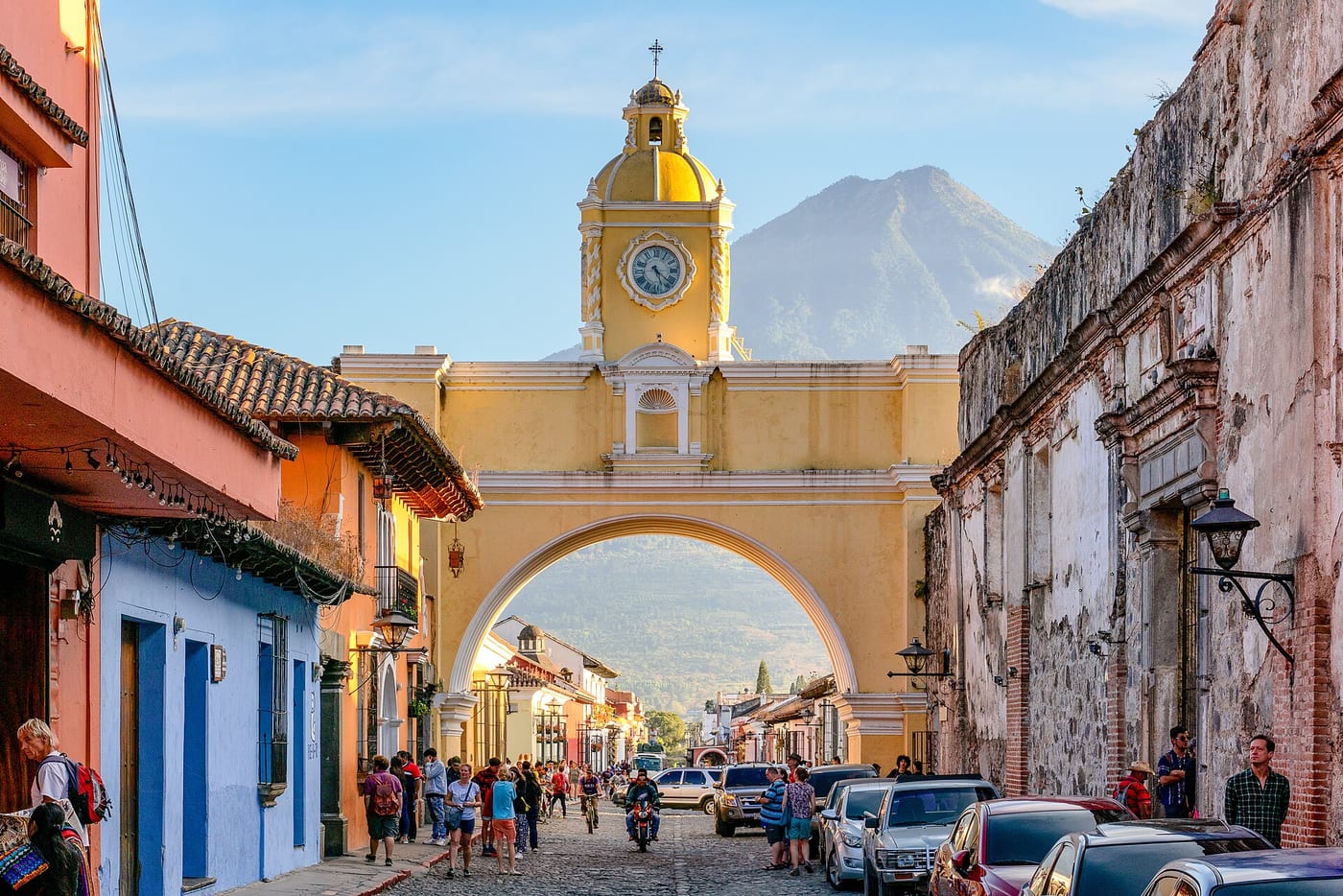
The yellow arch over Fifth Avenue North, built so that nuns could cross between convent buildings unseen, frames Volcán de Agua on clear days. Come early in the morning for photos without crowds.
Photo: Chad Davis · CC BY-SA 2.0 · Wikimedia Commons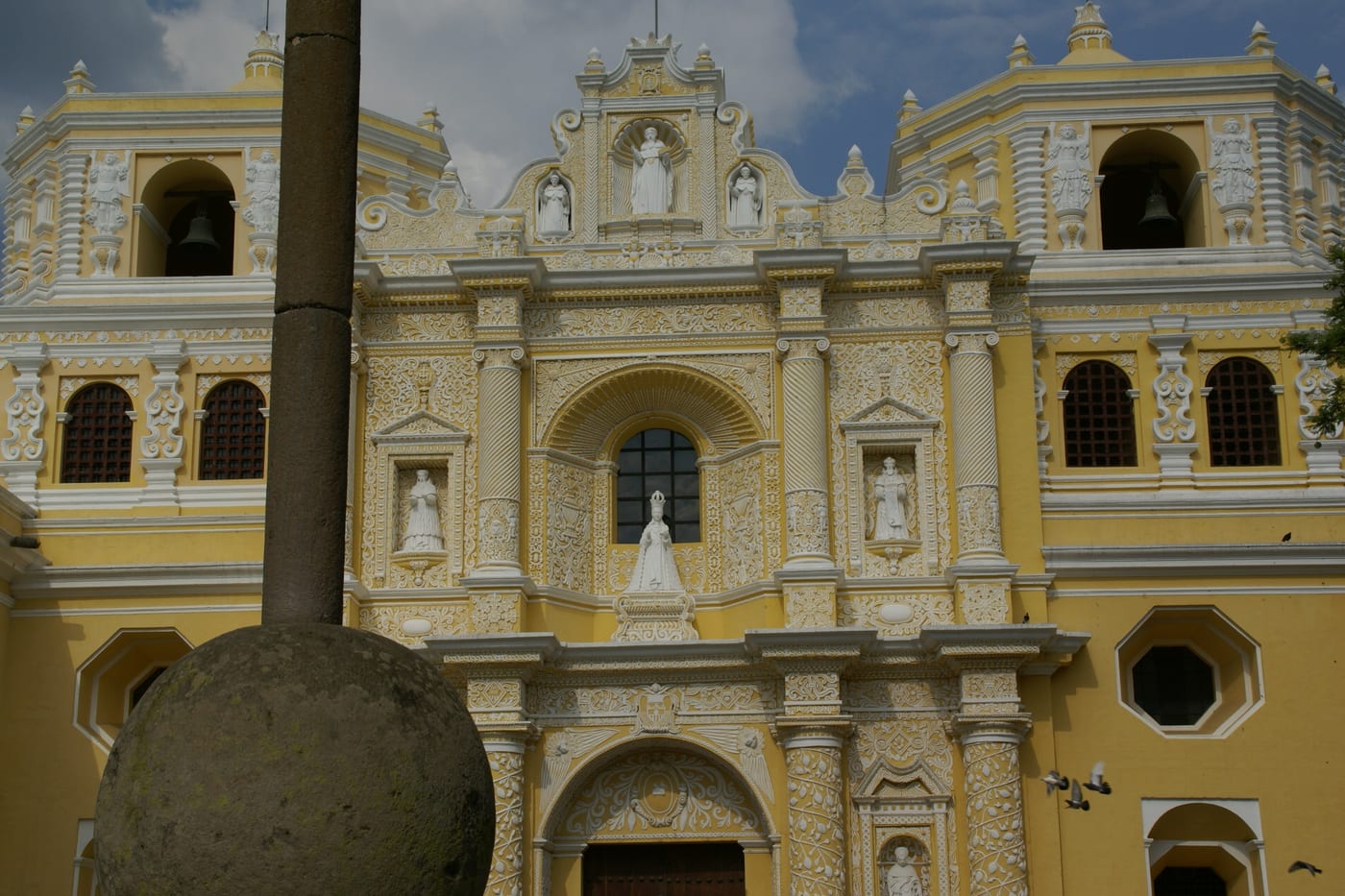
A church with an elaborately decorated yellow and white façade, one of the most photographed buildings in the city. The ruined cloister beside it, with its large fountain, can usually be visited.
Photo: Hermann Luyken · CC BY-SA 3.0 · Wikimedia Commons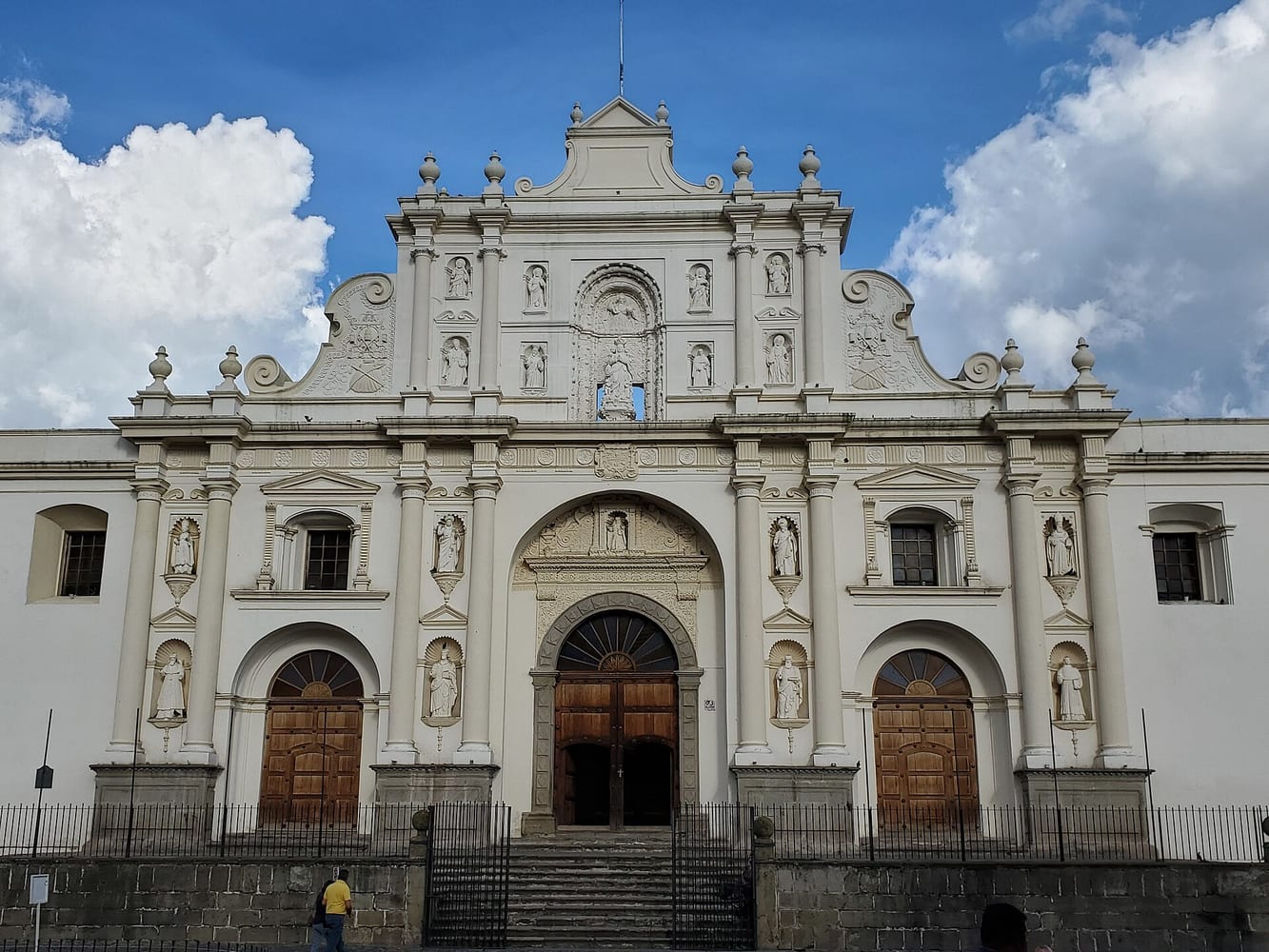
The tree-shaded main square, surrounded by the cathedral, the Palace of the Captains General and the arcaded city hall. Visit the ruined parts of the cathedral behind the restored front to see the scale of the earthquake damage.
Photo: Jprg1966 · CC BY-SA 4.0 · Wikimedia Commons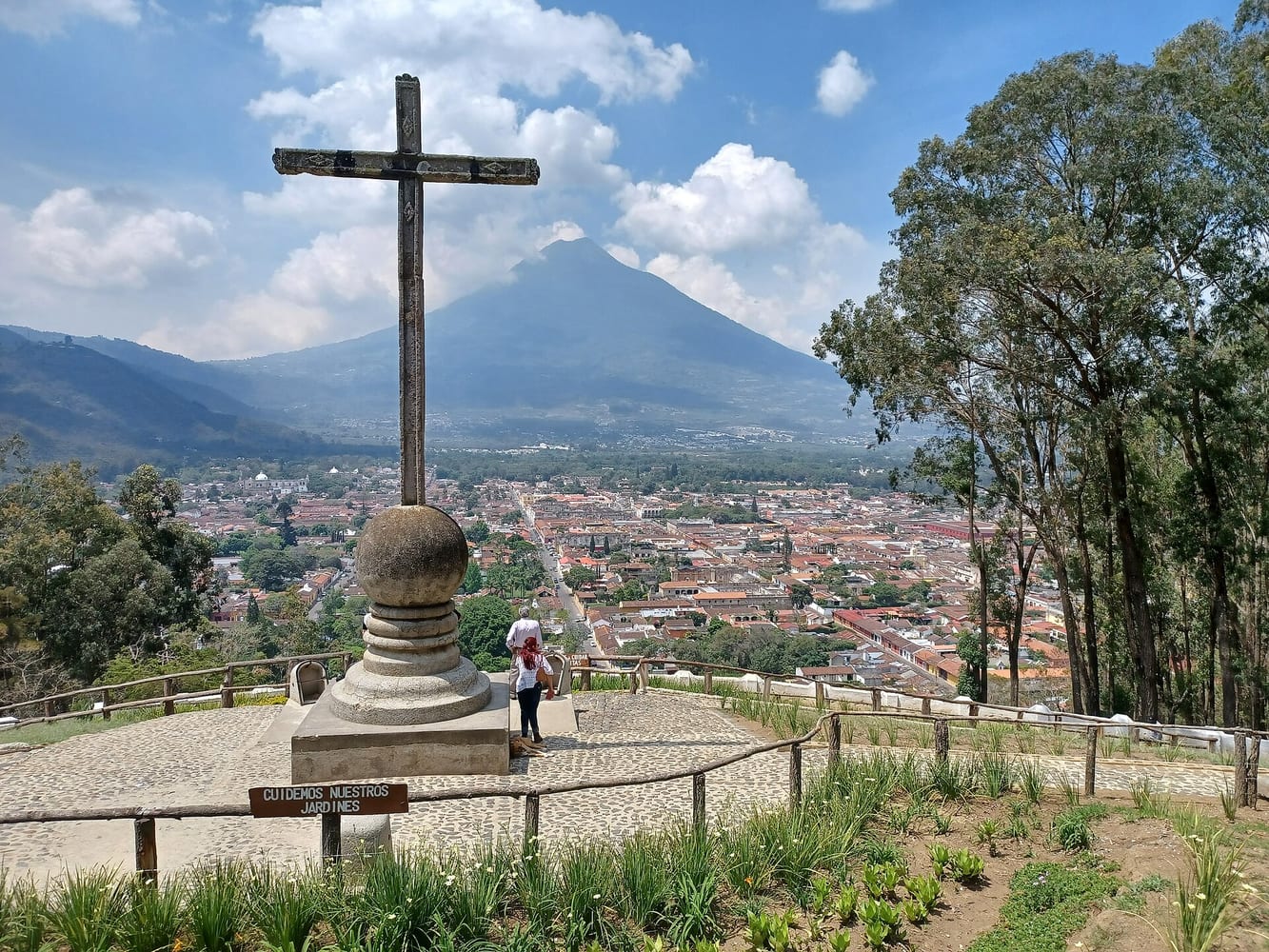
A hillside viewpoint north of the centre with a large stone cross and a classic view over the city towards Volcán de Agua. Go in daylight and ask locally about the best way up; there is also road access.
Photo: Simon Burchell · CC BY-SA 4.0 · Wikimedia Commons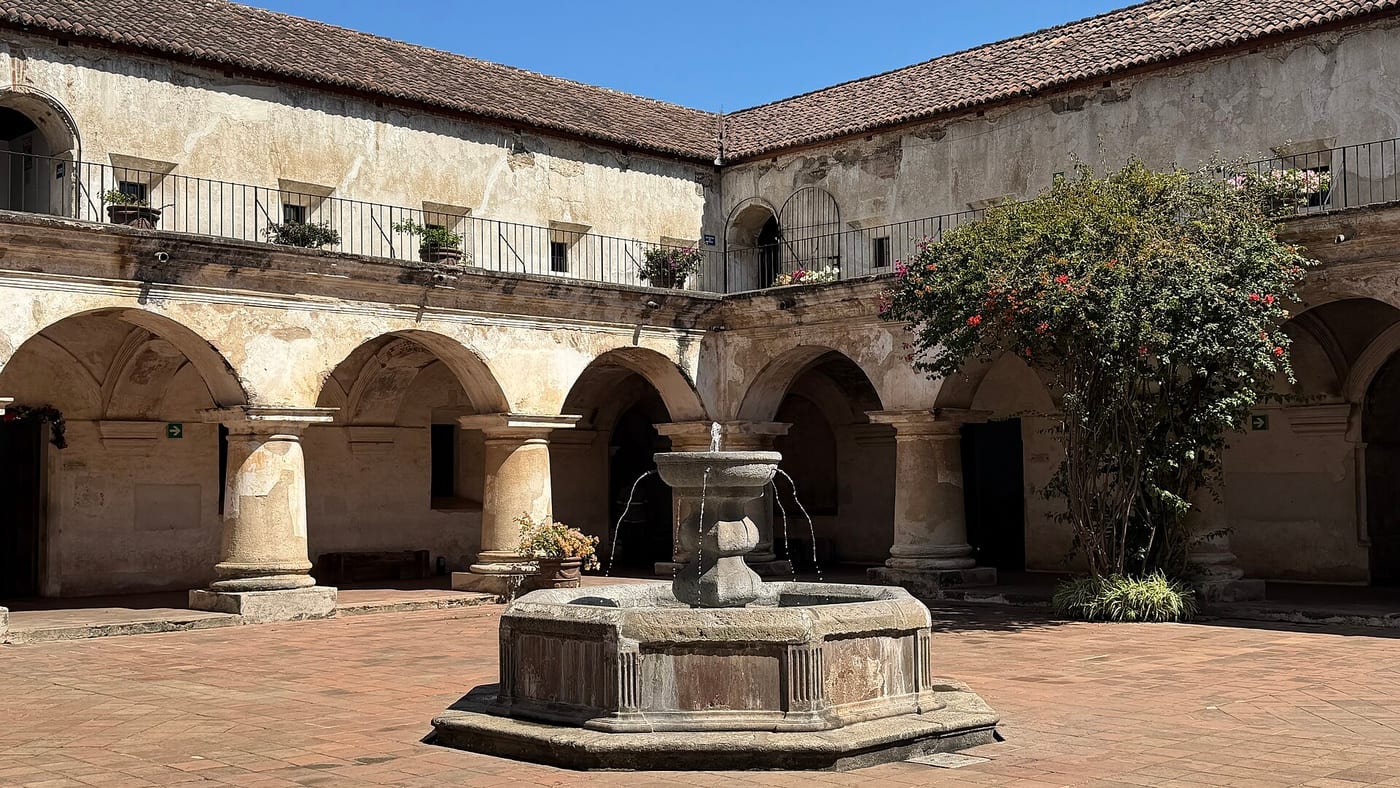
The ruins of an eighteenth-century convent, with an unusual circular cloister of nuns’ cells. Allow about an hour to explore its courtyards and gardens.
Photo: lamblukas from San Francisco, United States · CC BY 4.0 · Wikimedia CommonsEntry requirements, visas, health advice and safety conditions change. Before you travel, check Smartraveller and the official sources of each country.