One of the driest places on Earth, a high desert of salt flats, geysers, coloured valleys and altiplano lagoons, with some of the clearest night skies in the world.
The base for exploring the Atacama is San Pedro de Atacama, a small adobe town about an hour and a half by road from Calama airport. Allow at least three or four days and start with lower excursions, such as the Valle de la Luna, before the high-altitude trips to the geysers and lagoons, so your body can adjust. Many tours leave before dawn or return after sunset, and a stargazing tour is a highlight of most visits.
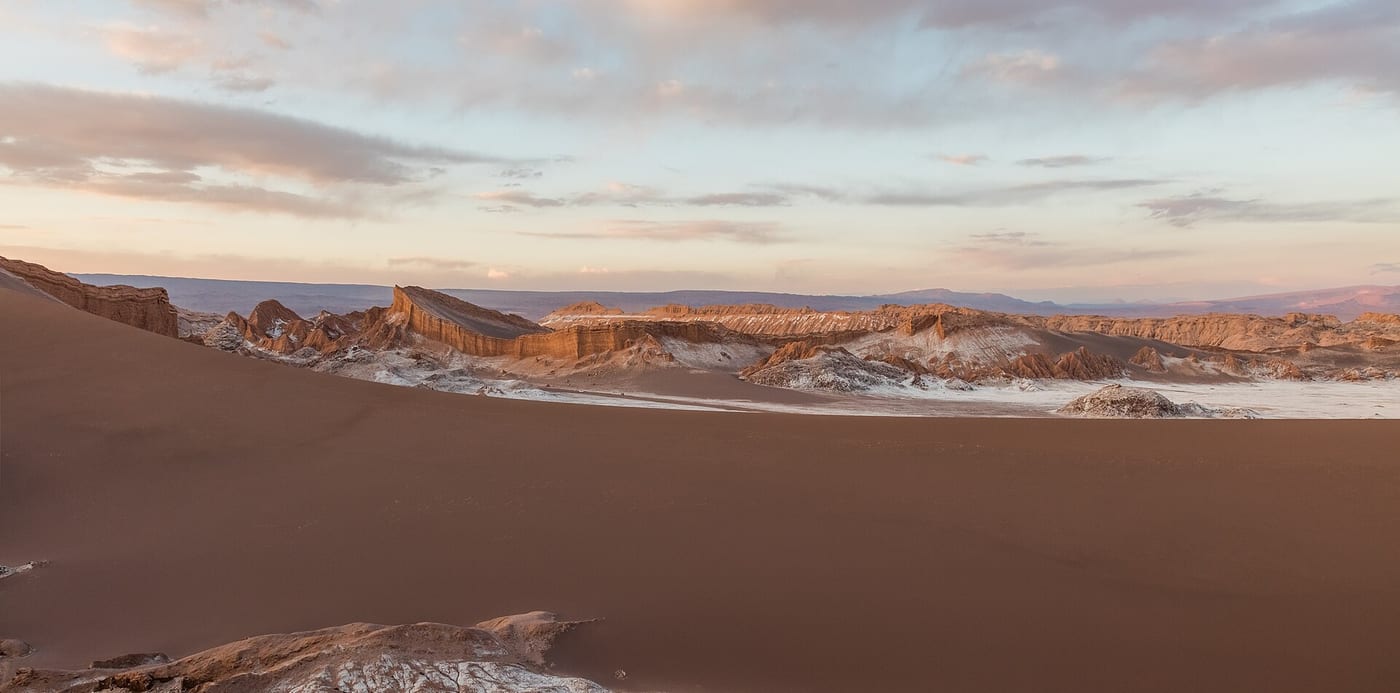
A valley of salt-crusted ridges, sand dunes and eroded rock formations close to San Pedro. Late afternoon visits end with the colours of sunset over the Andes volcanoes.
Photo: Diego Delso · CC BY-SA 4.0 · Wikimedia Commons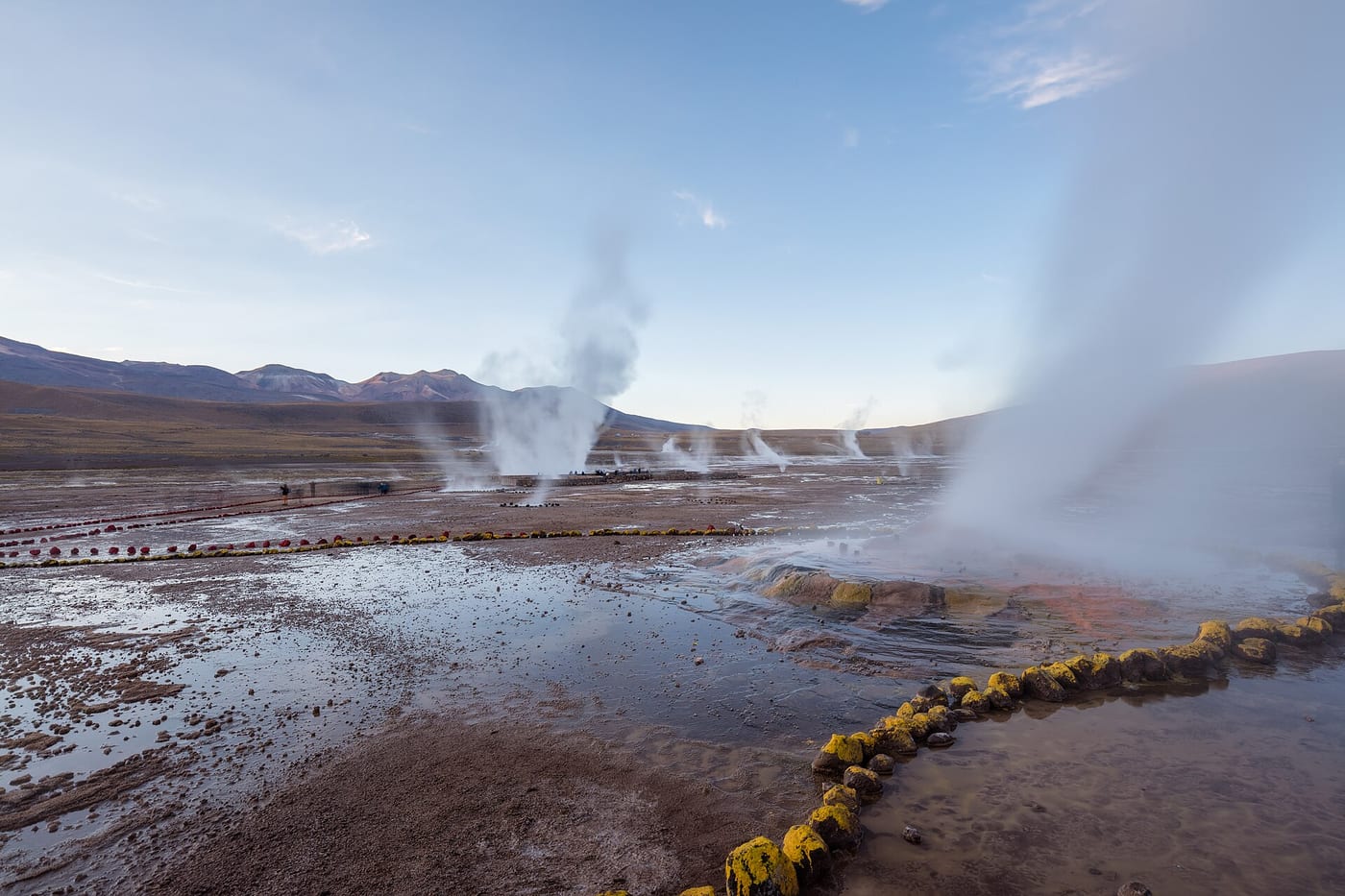
A geyser field at well over 4,000 metres, where columns of steam rise most strongly in the cold of early morning. Tours leave very early; dress in warm layers and stay on the marked paths.
Photo: Diego Delso · CC BY-SA 4.0 · Wikimedia Commons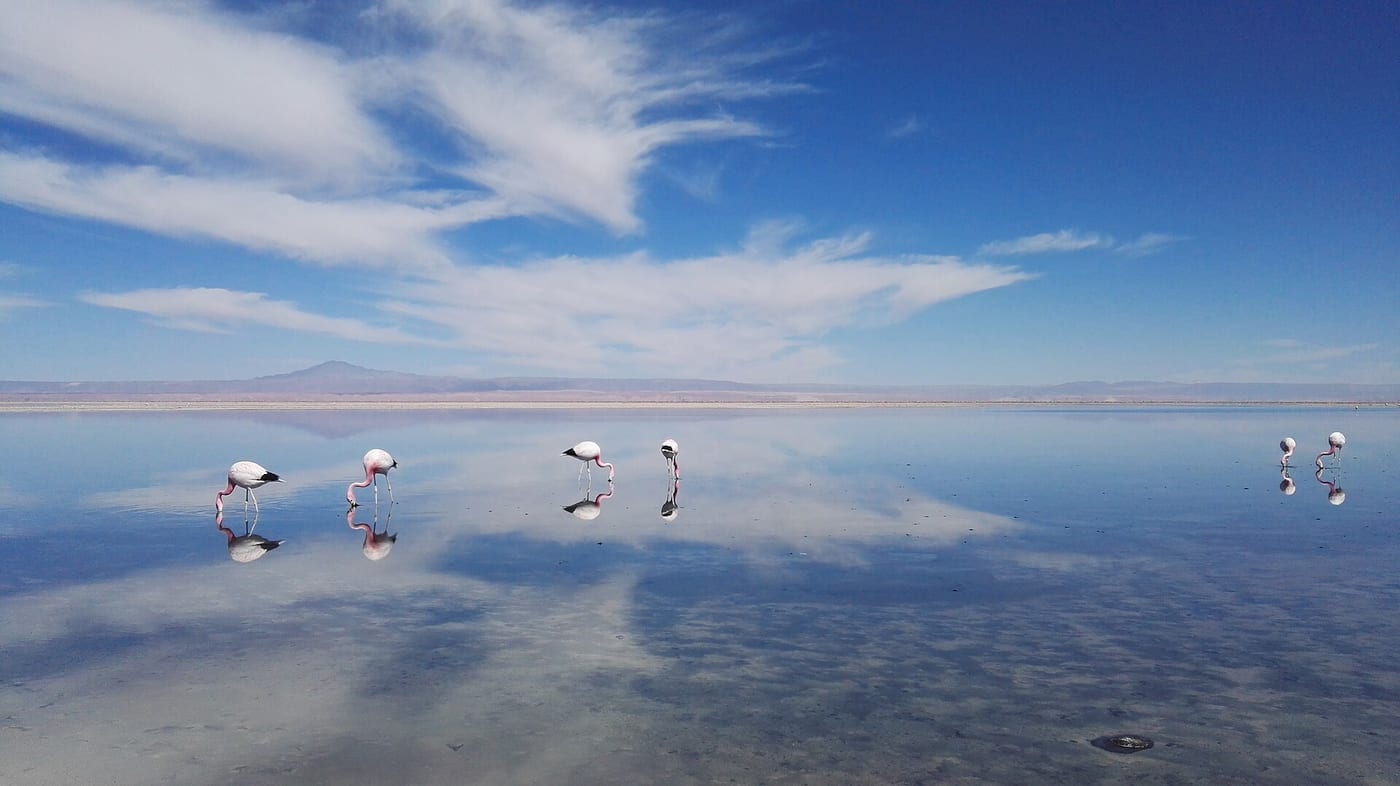
A shallow lagoon within the Salar de Atacama where Andean and Chilean flamingos feed. Late afternoon light is beautiful over the salt crust and the mountains.
Photo: Z_thomas · CC BY-SA 3.0 · Wikimedia Commons
Two deep-blue lagoons at the foot of volcanoes in the high Andes, about two hours from San Pedro. The altitude is high, so walk slowly and drink plenty of water.
Photo: Diego Delso · CC BY-SA 4.0 · Wikimedia Commons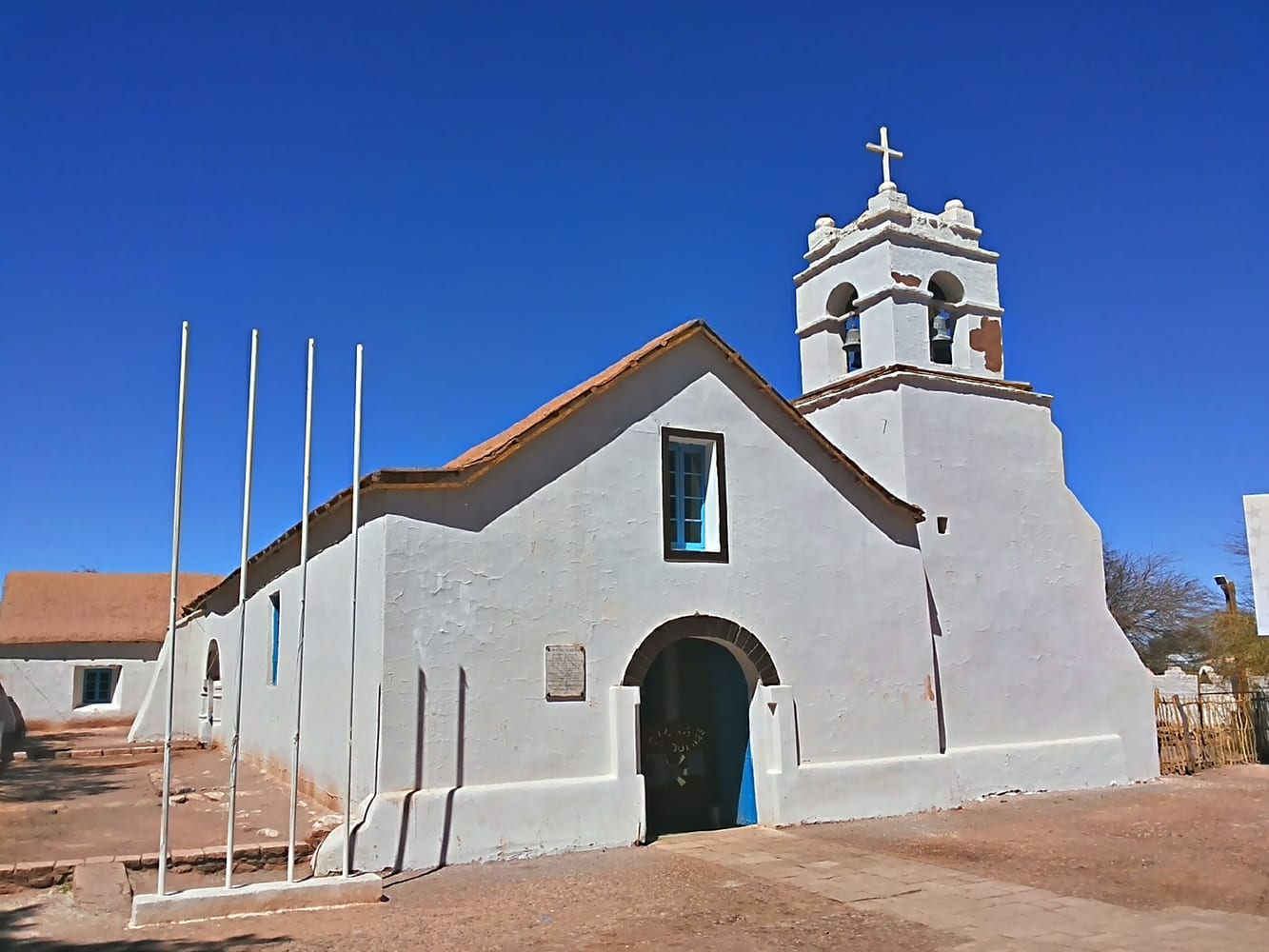
The whitewashed adobe church of San Pedro de Atacama, with a roof of cactus wood, stands beside the town’s shady main square. The town is small and easy to explore on foot.
Photo: fflemingl · CC BY-SA 3.0 · Wikimedia CommonsEntry requirements, visas, health advice and safety conditions change. Before you travel, check Smartraveller and the official sources of each country.