A remote Polynesian island in the Pacific, home of the Rapa Nui people and their ancestral moai, the great stone figures that honour their forebears.
Rapa Nui is about five hours by air from Santiago, and the only town is Hanga Roa. Allow at least three or four full days to visit the main ceremonial sites, the quarry of Rano Raraku, the crater of Rano Kau and the beach at Anakena. Much of the island lies within Rapa Nui National Park, managed by the Rapa Nui community and a UNESCO World Heritage site; many sites can only be visited with a licensed local guide, and the park ticket must be bought in advance or on arrival.
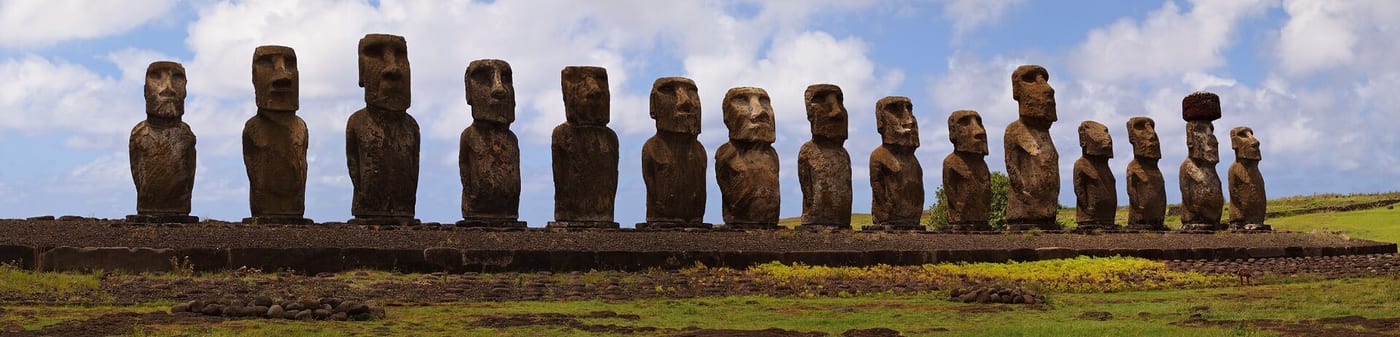
The largest ceremonial platform on the island, with fifteen moai standing in a row with their backs to the sea, restored in the 1990s. Many visitors come for the sunrise; keep well back from the platform.
Photo: Lars Juhl Jensen · CC BY 3.0 · Wikimedia Commons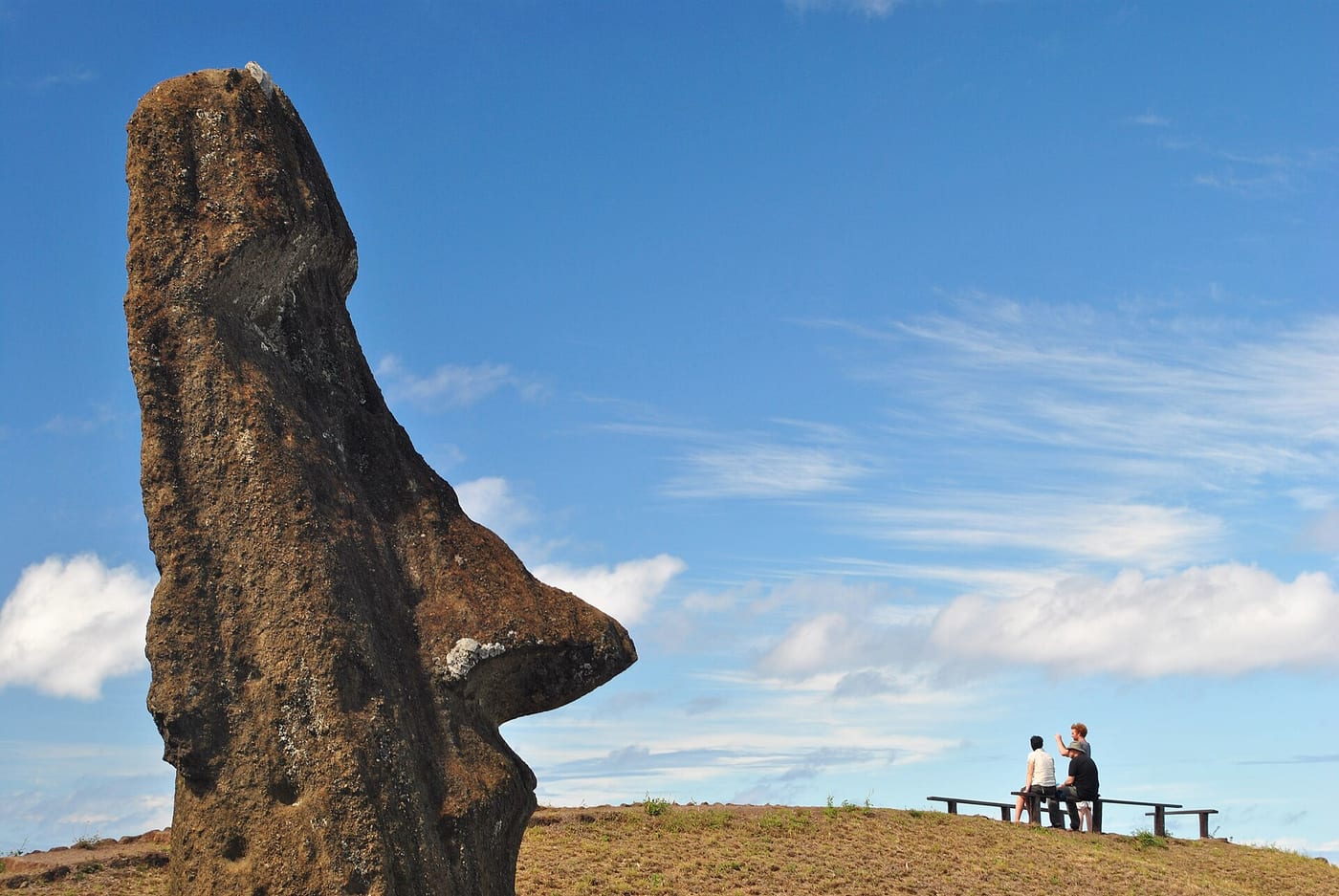
The volcanic crater where the moai were carved from the rock, with many figures still standing half-buried on the slopes. Visits follow marked paths, and entry is controlled as part of the park ticket.
Photo: Javier Ramos Pinochet · CC BY-SA 3.0 · Wikimedia Commons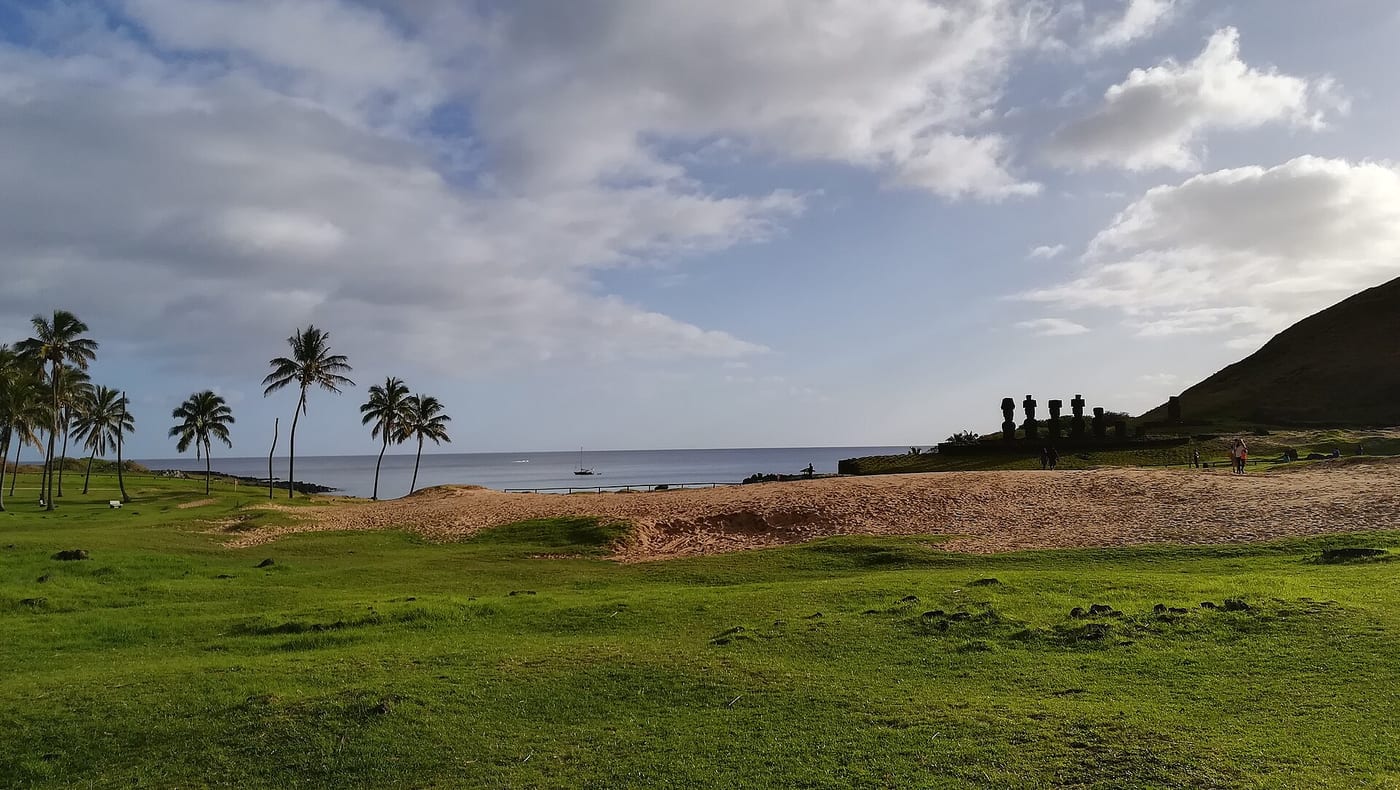
A white-sand beach fringed with palm trees, which in Rapa Nui tradition is where the first ancestors landed. The moai of Ahu Nau Nau, with their red stone topknots, stand above the sand.
Photo: ErnestCasalsAmaia · CC BY-SA 4.0 · Wikimedia Commons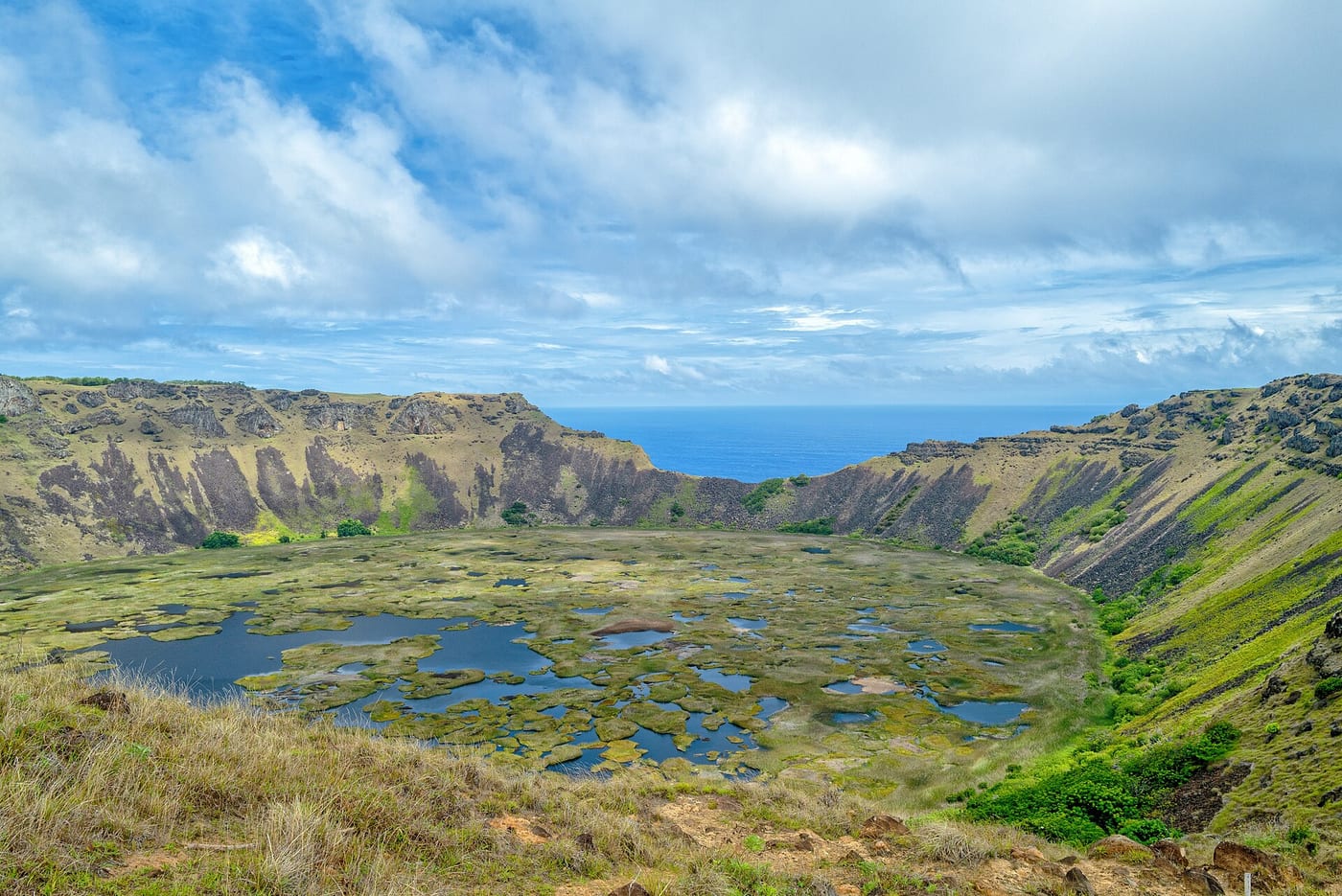
On the rim of the huge Rano Kau crater, the ceremonial village of Orongo is linked to the Tangata Manu (birdman) tradition, with rock carvings and views over the sea and the islets. The edge is steep; keep to the paths.
Photo: Otávio Nogueira from Fortaleza, BR · CC BY 2.0 · Wikimedia Commons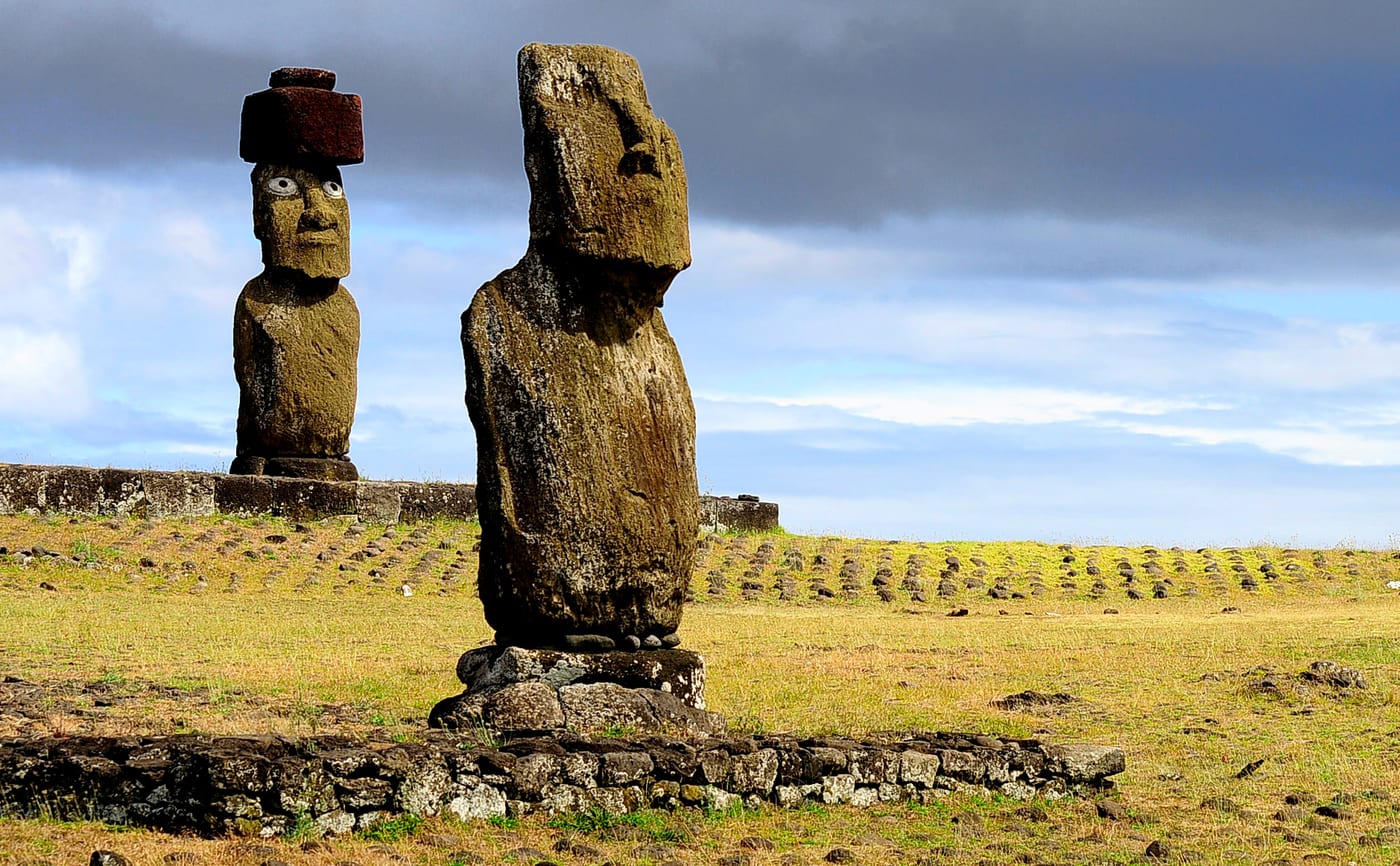
A ceremonial complex on the edge of Hanga Roa, with restored moai, including one with its eyes, facing inland over the village. It is a favourite place to watch the sunset.
Photo: LBM1948 · CC BY-SA 4.0 · Wikimedia CommonsEntry requirements, visas, health advice and safety conditions change. Before you travel, check Smartraveller and the official sources of each country.