Ecuador’s capital lies high in an Andean valley ringed by volcanoes, with one of the largest and best-preserved colonial centres in the Americas.
Quito sits at about 2,800 metres, so take the first day gently while you adjust to the altitude. Plan two or three days: one for the historic centre and its churches, one for the views from El Panecillo or the TelefériQo, and a half day for the Mitad del Mundo on the equator. The city stretches along a long valley, so use taxis or arranged transfers between areas.
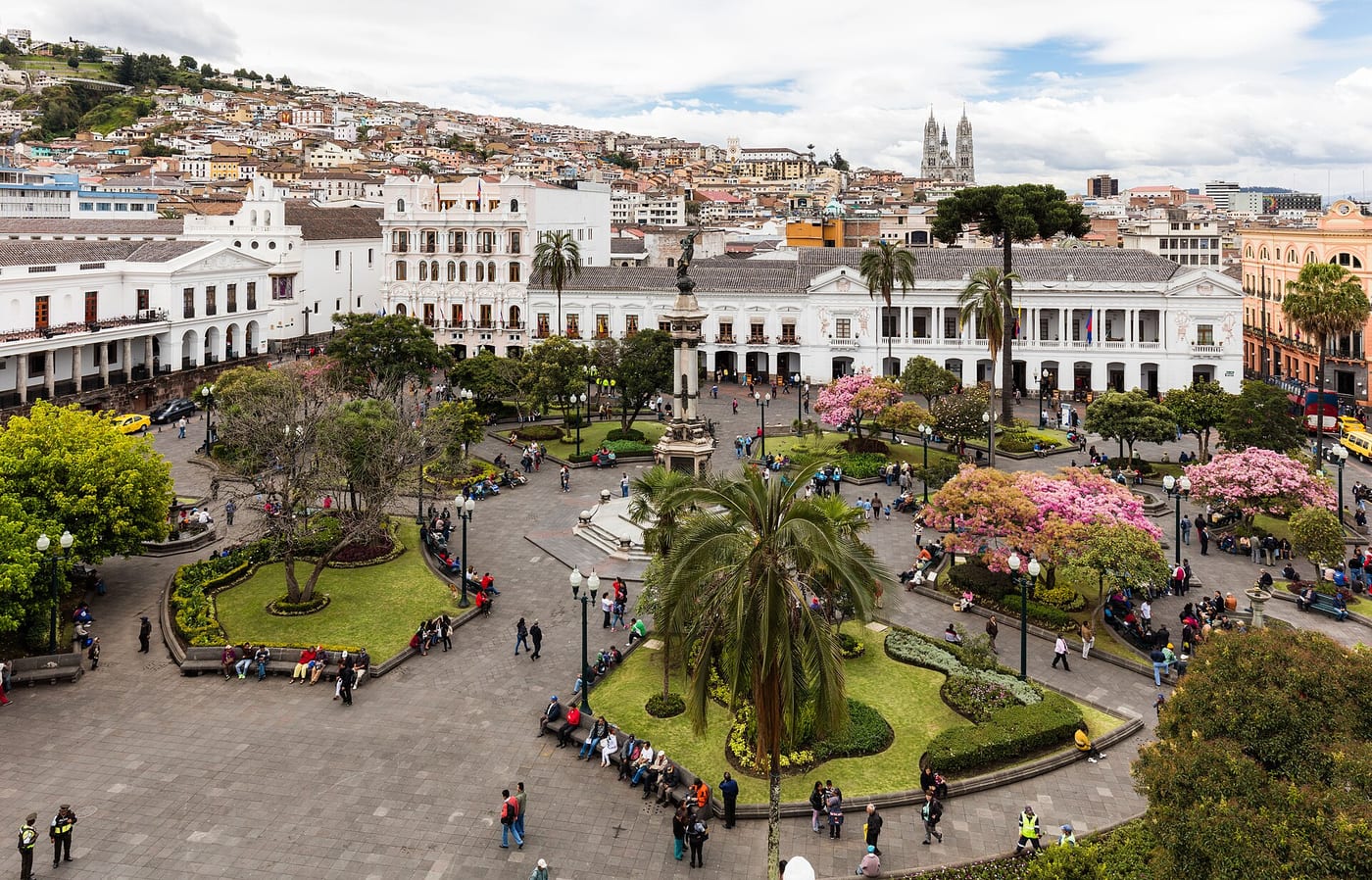
The main square of the old town, framed by the cathedral, the presidential palace and the archbishop’s palace. It is a lively place to start a walking tour of the historic centre, a World Heritage site.
Photo: Diego Delso · CC BY-SA 4.0 · Wikimedia Commons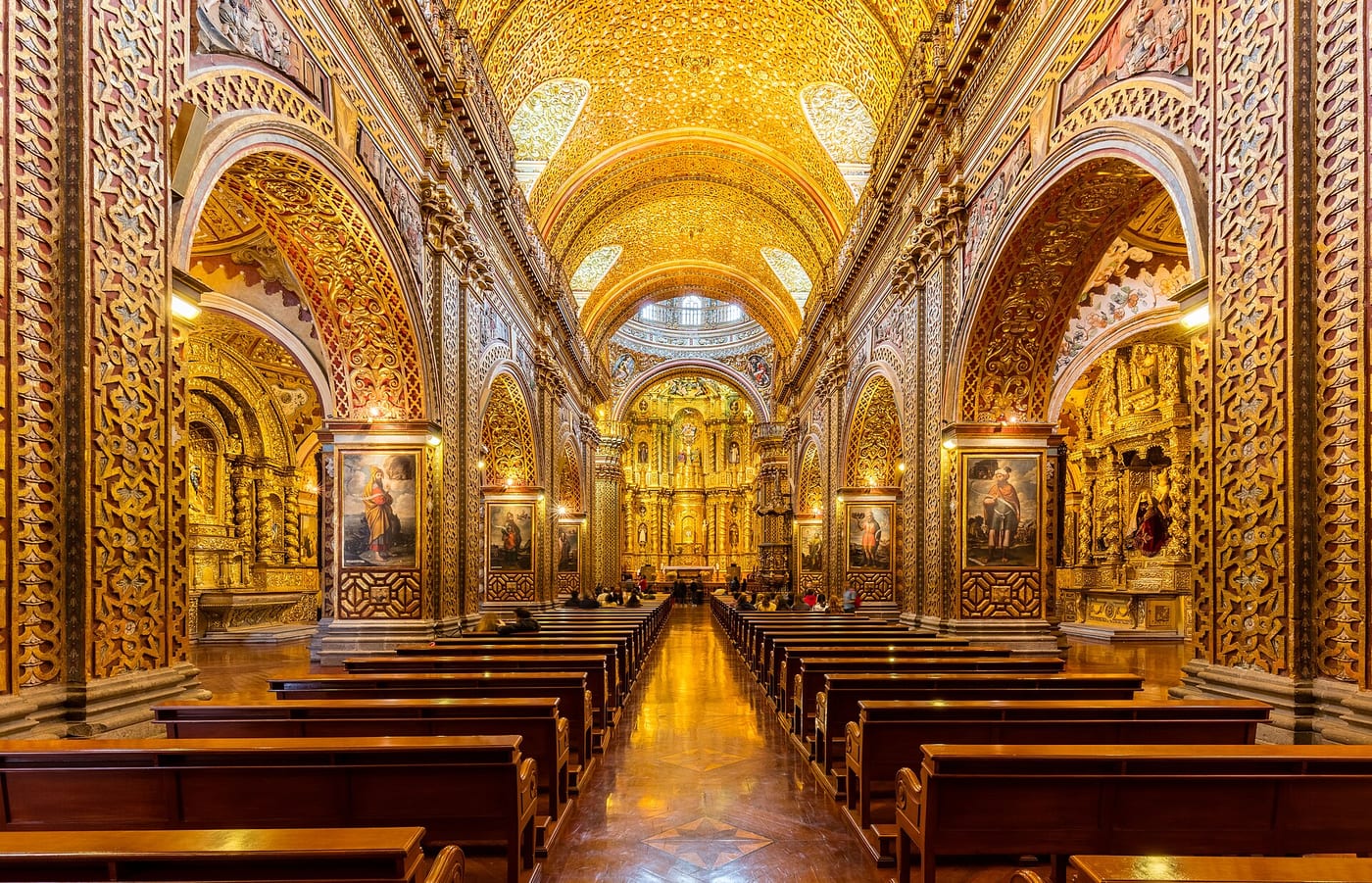
A Jesuit church whose interior is covered almost entirely in gold leaf, one of the great works of Spanish colonial baroque in South America. Photography inside may be restricted, so check at the entrance.
Photo: Diego Delso · CC BY-SA 4.0 · Wikimedia Commons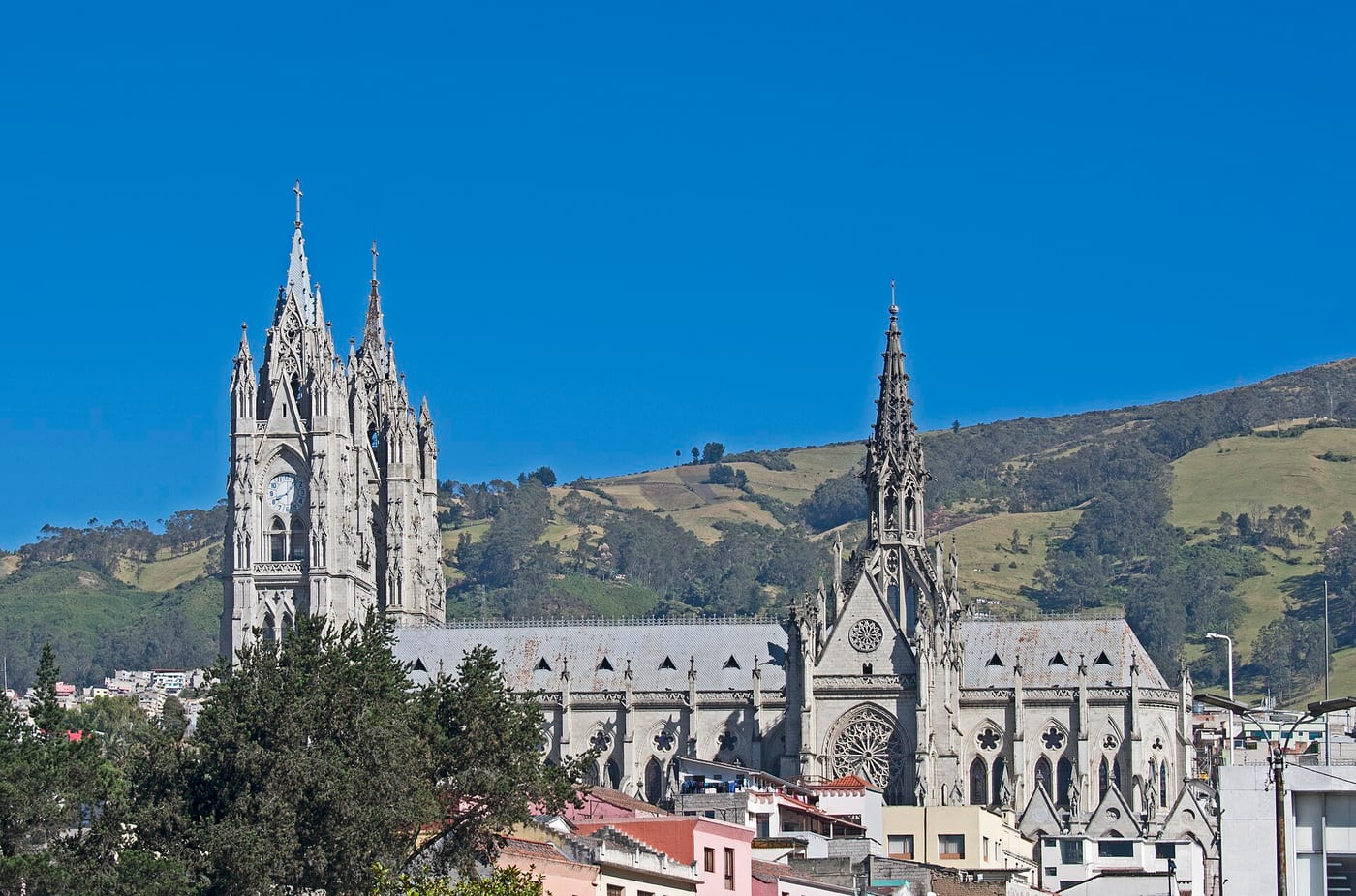
A large neo-Gothic basilica with gargoyles shaped like Ecuadorian animals such as tortoises and armadillos. When open, visitors can climb its towers for wide views over the old town.
Photo: Ymblanter · CC BY-SA 4.0 · Wikimedia Commons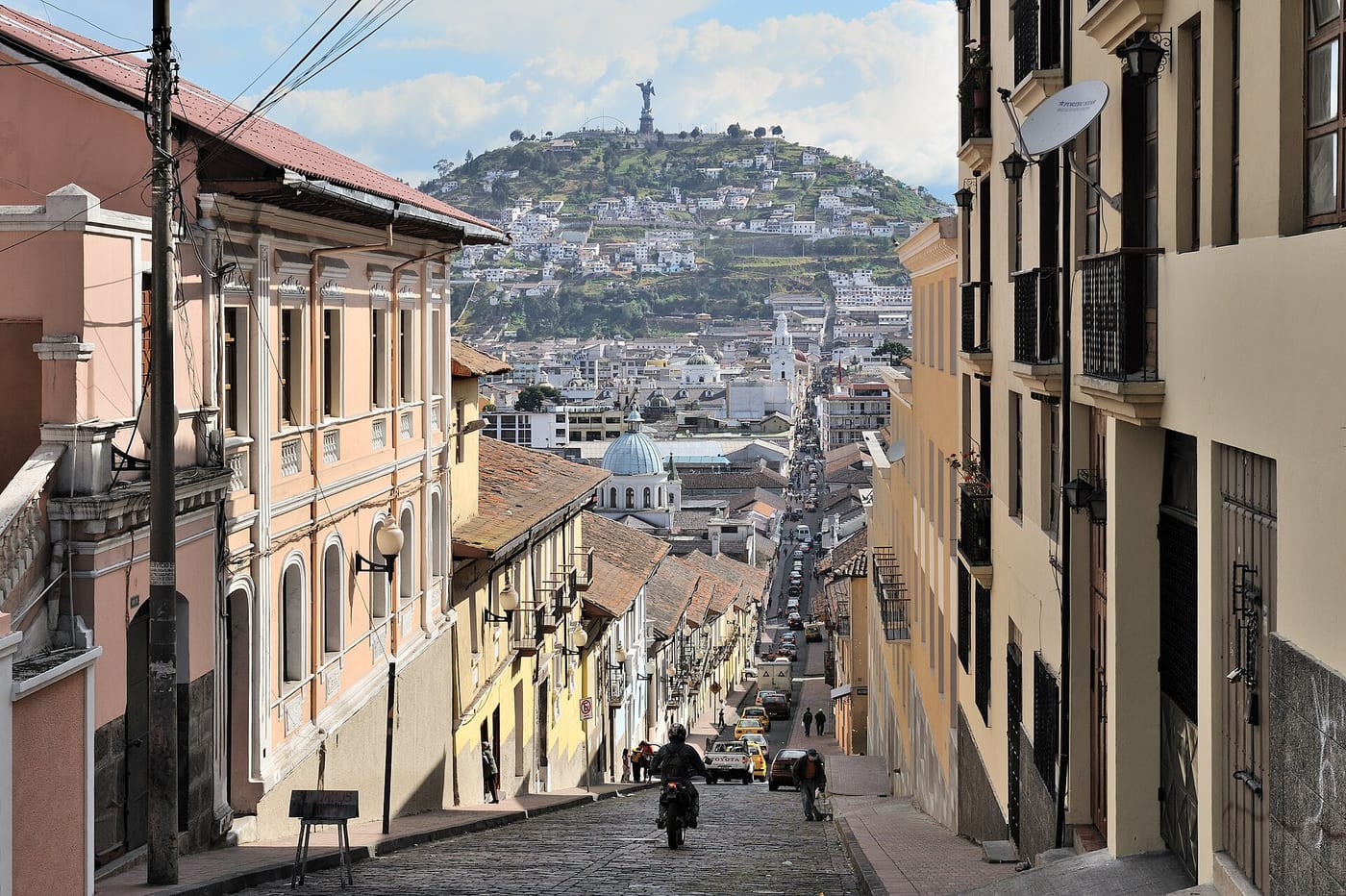
A hill above the old town crowned by a large aluminium statue of the winged Virgin of Quito. Go by taxi and visit in daylight for the views across the city to the volcanoes.
Photo: Cayambe · CC BY-SA 3.0 · Wikimedia Commons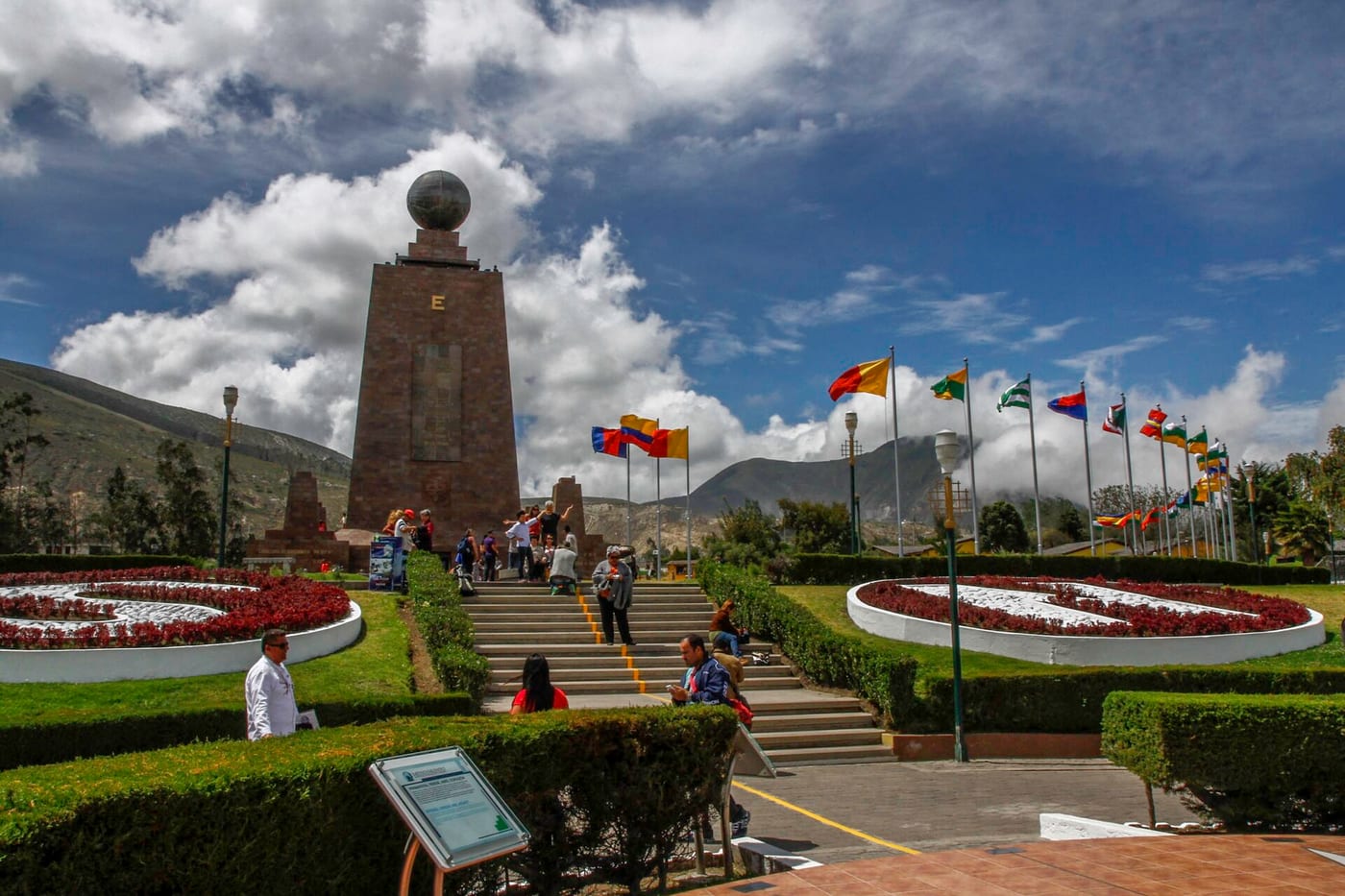
A monument and park north of the city marking the equator line, with museums and exhibits about the region. It is usually combined with a visit to the nearby Pululahua crater.
Photo: Medios Públicos EP · CC BY-SA 2.0 · Wikimedia CommonsEntry requirements, visas, health advice and safety conditions change. Before you travel, check Smartraveller and the official sources of each country.