A vast, deep-blue lake on the high Andean plateau, shared by Bolivia and Peru, with sacred islands, terraced hillsides and the snowy Cordillera Real on the horizon.
On the Bolivian side, the lakeside town of Copacabana is the usual base, about three and a half hours by road from La Paz, including a short ferry across the Strait of Tiquina. From there, boats go to Isla del Sol and Isla de la Luna. Staying one night on Isla del Sol lets you see the lake at sunrise and sunset. The lake sits at about 3,800 metres, so it fits well after a few days in La Paz.
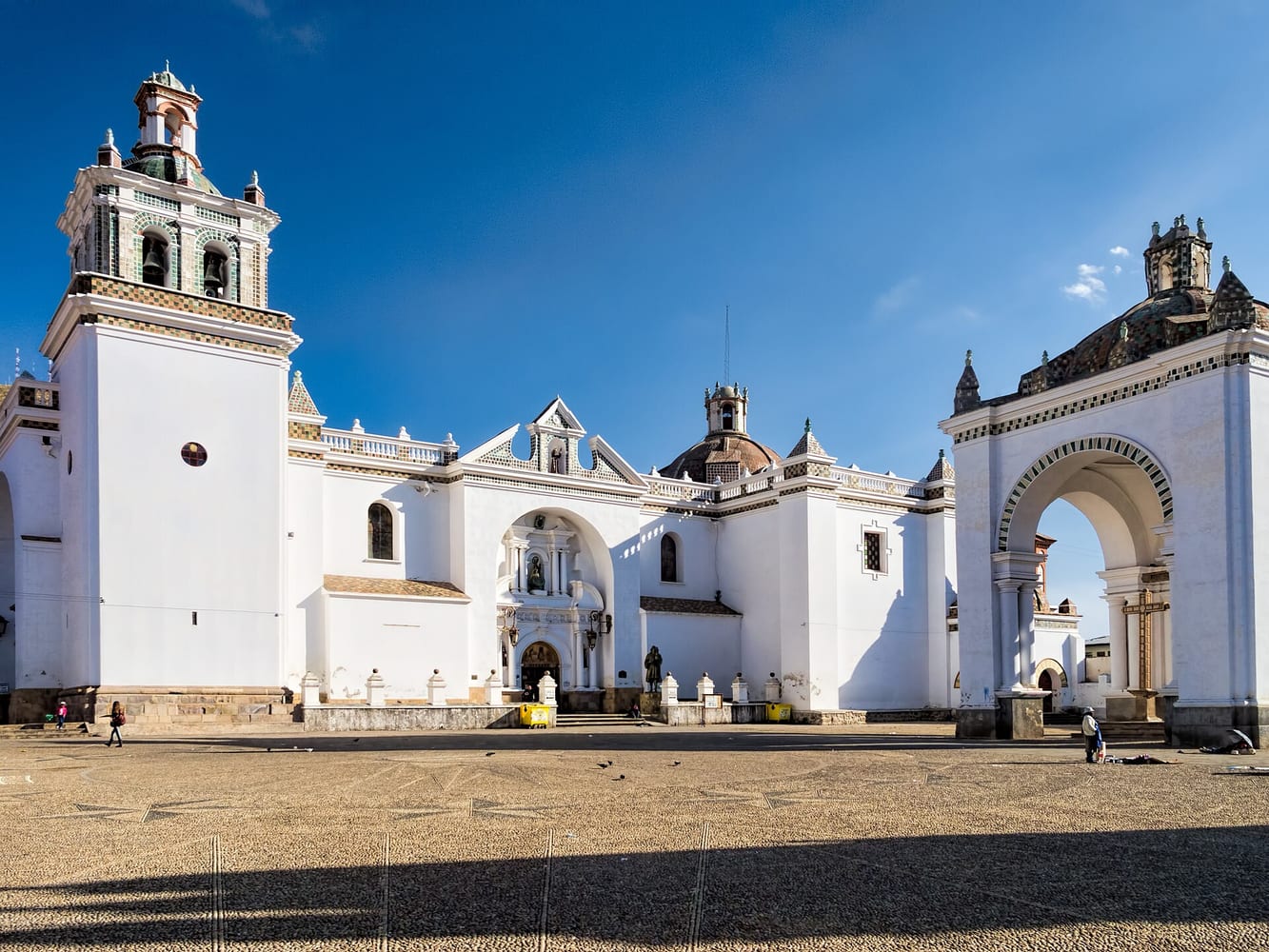
A small lakeside town known for its white Moorish-style basilica, home of the revered Virgen de Copacabana and a centre of pilgrimage. On weekends you may see the colourful blessing of decorated cars outside the church.
Photo: Dan Lundberg · CC BY-SA 2.0 · Wikimedia Commons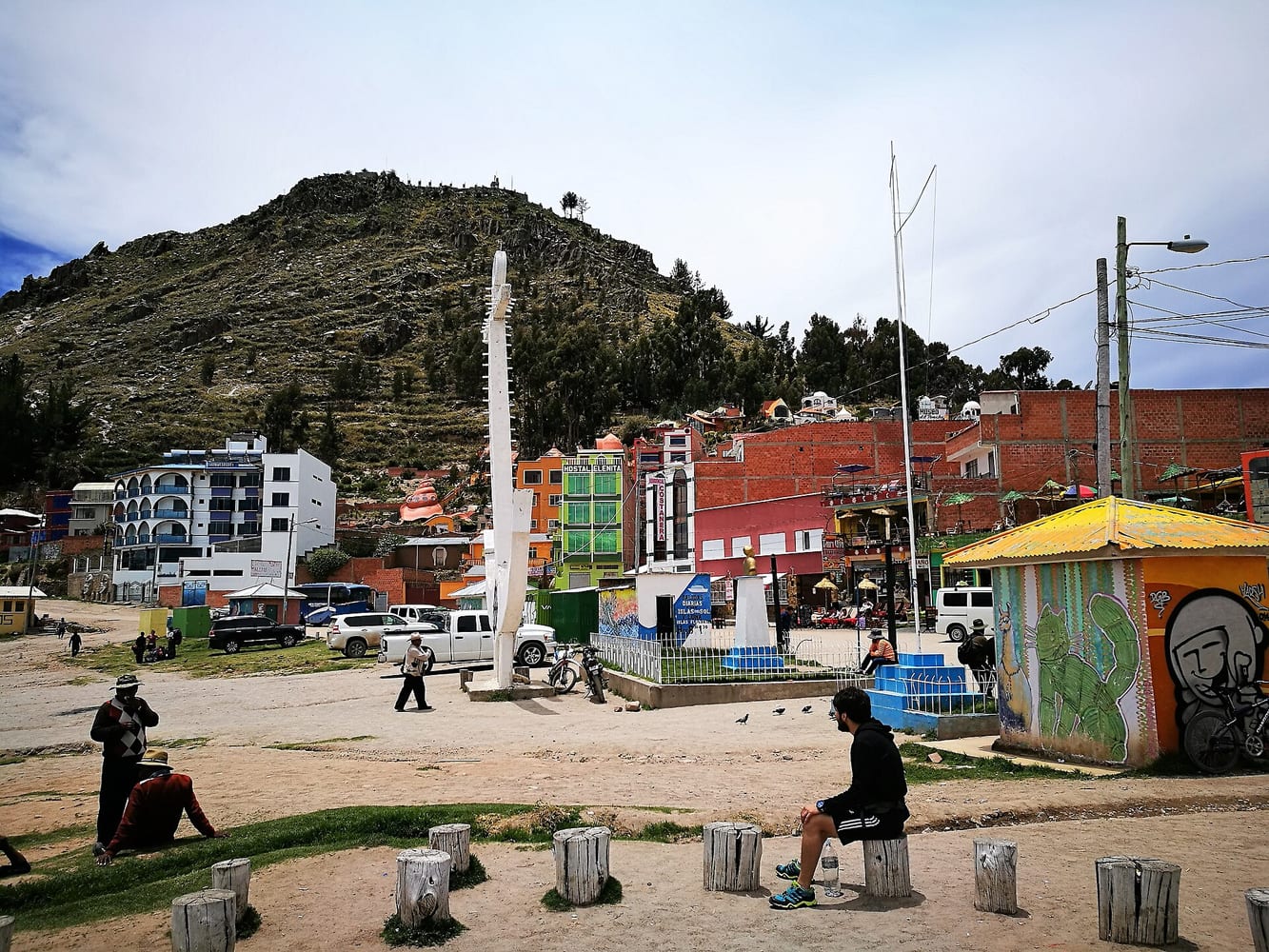
A hill above Copacabana with Stations of the Cross along the path and a wide view over the town, bay and lake. The climb is steep at this altitude, so go slowly, ideally for sunset.
Photo: Pitxiquin · CC BY-SA 4.0 · Wikimedia Commons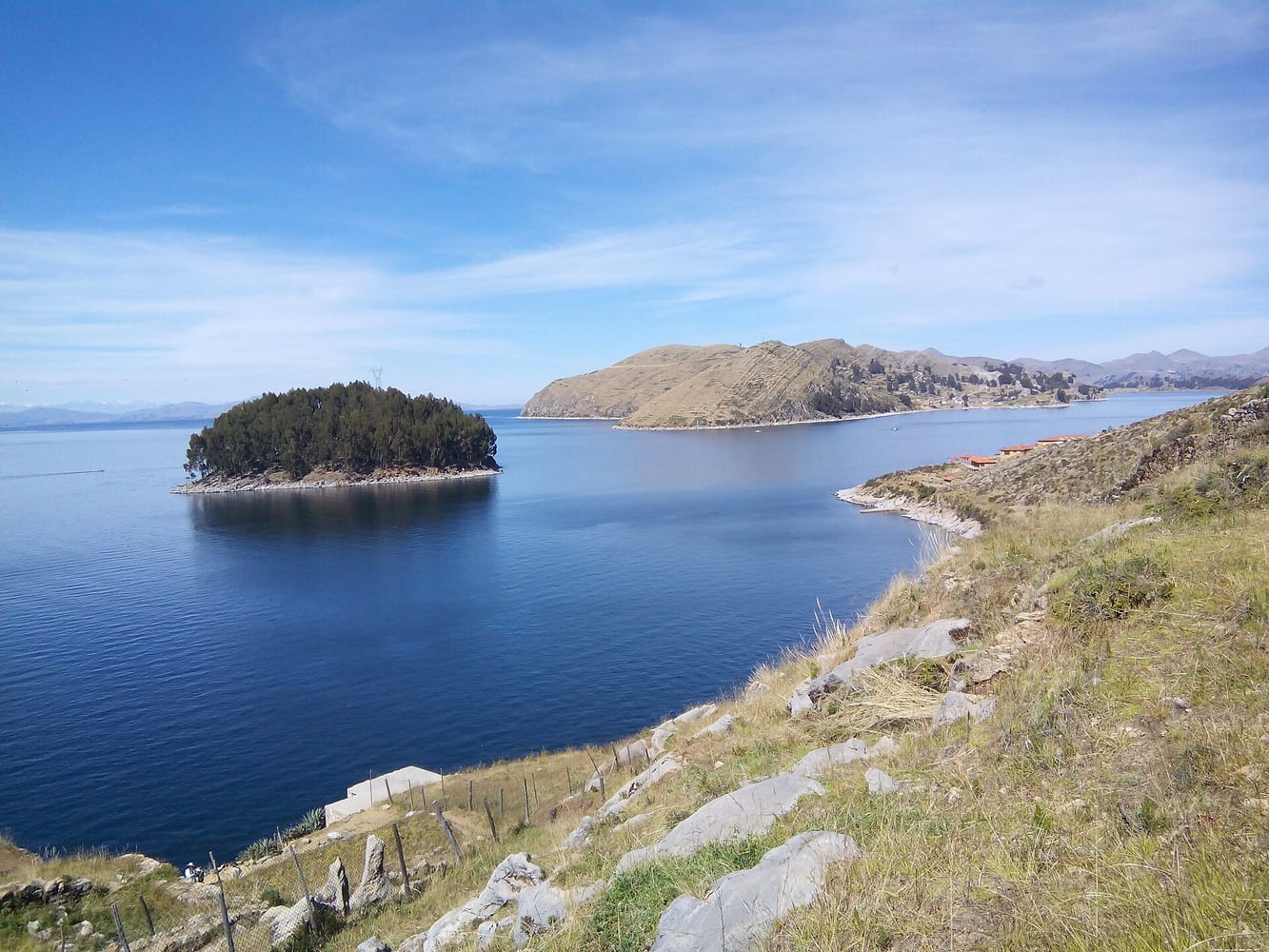
In Andean tradition the birthplace of the sun, with Inca ruins, terraces, small villages and walking paths above the lake. Walking routes on the island can change, so ask locally which paths are open.
Photo: Sasha India · CC BY 2.0 · Wikimedia Commons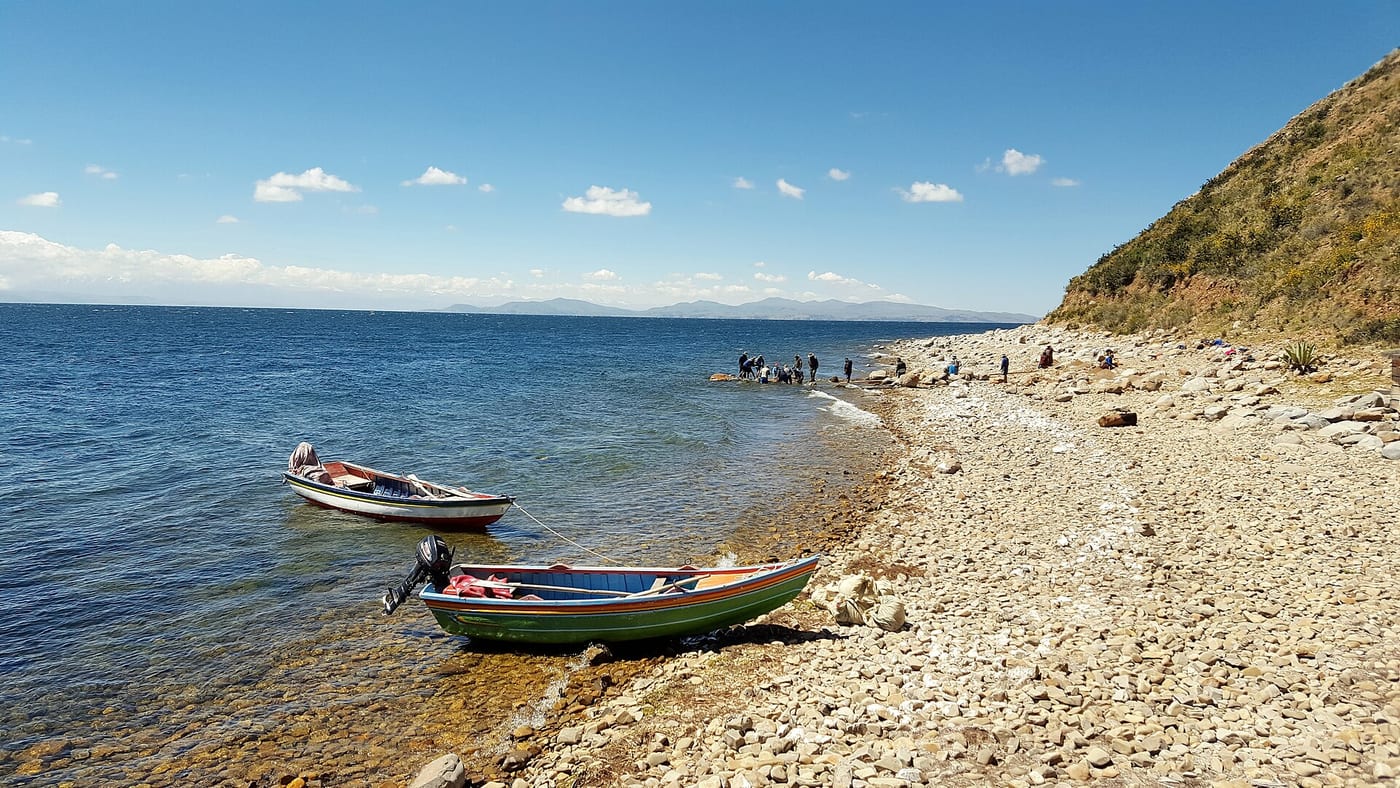
A smaller, quieter island with the remains of an Inca temple associated with the moon and with chosen women. It is often combined with Isla del Sol on a boat trip.
Photo: Chtiwiki · CC BY-SA 4.0 · Wikimedia Commons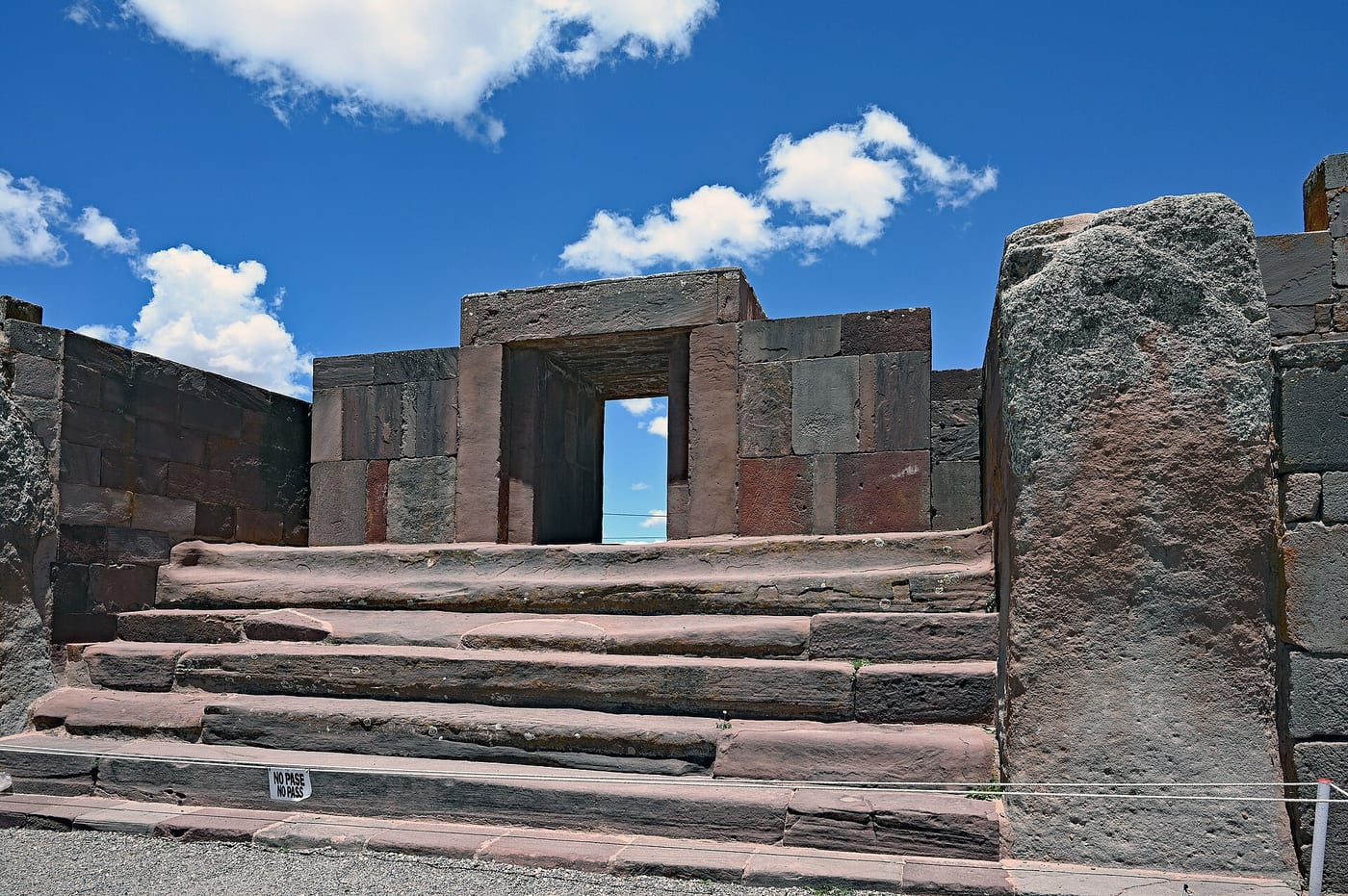
The remains of a pre-Inca city near the lake, with the Gate of the Sun, the Kalasasaya temple and carved stone monoliths. It is a UNESCO World Heritage site, usually visited on a day trip from La Paz.
Photo: P. Hughes · CC BY 4.0 · Wikimedia CommonsEntry requirements, visas, health advice and safety conditions change. Before you travel, check Smartraveller and the official sources of each country.